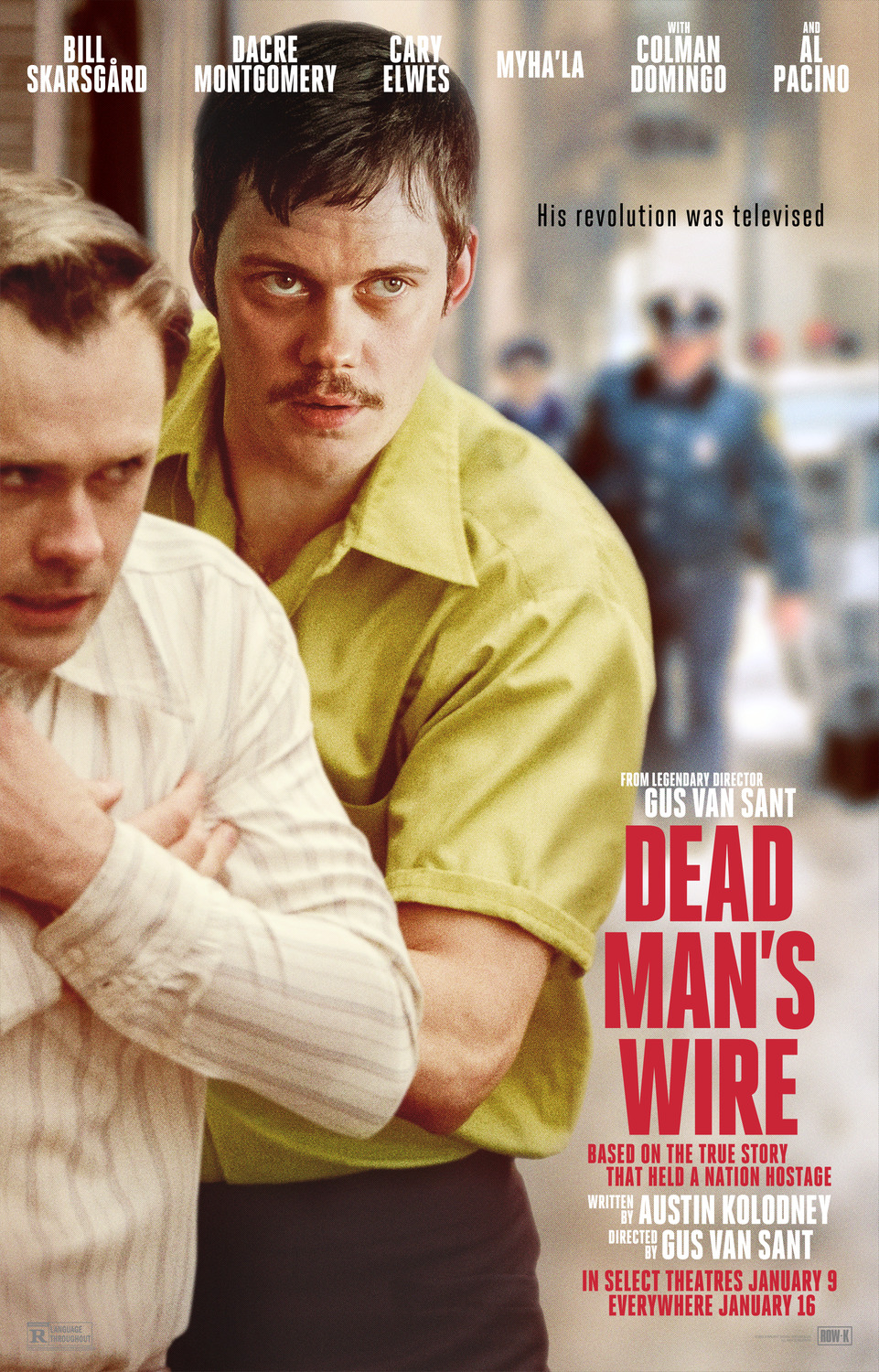
 Richard O. Hall was a mortgage executive in Indianapolis who was kidnapped and held hostage for about 63 hours in February 1977 by a disgruntled borrower named Anthony "Tony" Kiritsis. The incident became nationally infamous because it unfolded live on television and inspired later documentaries and dramatizations.
Tony Kiritsis had taken out a large loan through Meridian Mortgage Company, where Richard O. Hall was an executive, to buy and develop about 17 acres of land into a shopping center.
When the development stalled and Kiritsis fell behind on payments, he became convinced that Hall and his father Millard Hall were scheming to foreclose, seize the now more valuable land, and profit from it themselves.
Feeling trapped financially and betrayed, Kiritsis decided to retaliate by targeting Hall, framing the kidnapping as his way of forcing justice for what he believed was a corrupt deal.
On the morning of February 8, 1977, Kiritsis went into Hall's Indianapolis office with a sawed‑off 12‑gauge shotgun and seized him at gunpoint. He rigged the gun to the back of Hall’s head with a wire system that ran from the trigger to Hall's neck and also to his own body, a setup he called a "dead man’s line" or "dead man’s switch."
The logic was that if police shot Kiritsis or if Hall tried to escape, the tension on the wire would pull the trigger and kill Hall instantly, making any direct intervention incredibly risky.
After forcing Hall to call police from the office, Kiritsis marched him out into frigid downtown streets, still wired to the shotgun, surrounded by officers and reporters who captured now‑iconic photos and footage. Kiritsis then commandeered a vehicle and made Hall drive to his apartment complex, where he claimed to have set explosives, prompting the evacuation of more than 100 residents.
Hall was chained and held there for nearly three days while Kiritsis negotiated, ranted to the media, and used the intense coverage to present himself as a wronged everyman rather than a straightforward criminal. He trusted WIBC-AM's Fred Heckman to be his sole communicator to tell the public his story on the radio. Heckman’s calm demeanor with the kidnapper helped de-escalate tensions.
On February 10, 1977, after assurances that his demands would be met, Kiritsis walked Hall back out of the apartment at gunpoint and delivered a lengthy, emotional speech to assembled reporters and cameras.
He then dramatically announced that Hall was safe and, crucially, revealed that by that point the shotgun was no longer wired to fire, meaning Hall had been in less danger during those final moments than anyone realized. Hall was released physically unharmed but understandably traumatized and taken to a hospital for evaluation.
Kiritsis was charged with kidnapping, armed robbery, and related offenses, but in October 1977 he was found not guilty by reason of insanity and committed to a state mental health institution rather than prison.
The case spurred debate about the insanity defense, media ethics in live hostage coverage, and police tactics when a "dead man's switch" makes a standard rescue nearly impossible.
Decades later, the story continues to be revisited in documentaries such as Dead Man’s Line and dramatized projects like Dead Man’s Wire, which stars Bill Skarsgård as Tony Kiritsis, Dacre Montgomery as Richard Hall and Colman Domingo as Fred Temple. It explores both Kiritsis's grievance and the extraordinary public spectacle of Hall's kidnapping.
Dead Man's Wire opens this Friday, January 16, 2026 in theaters. ~Alexandra Heilbron
Sounds like a great film
I'm horribly nervous-- already!